
China's five-year plans drive global development
China's five-year plans drive global development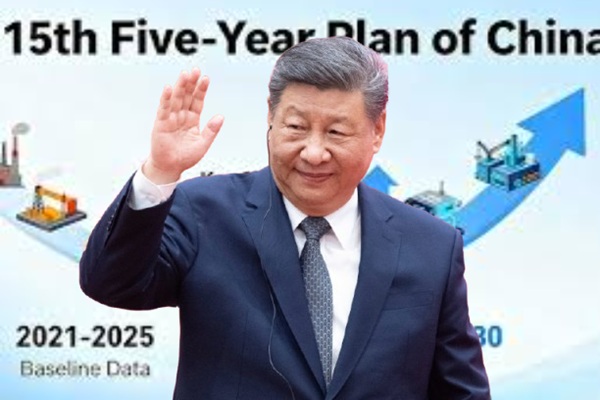
By Pei Guangjiang
In 2025, China started to map out its blueprint for the 15th Five-Year Plan period (2026-2030), an event of great significance not only for its journey toward building a modern socialist country, but also for global development.
On Oct. 15, the first batch of exhibits for the 8th China International Import Expo (CIIE) from Peru's Chancay Port arrived in Shanghai, including Andes-style pottery, soft alpaca wool products, and other goods that brought a distinct South American touch to the CIIE.
The Chancay Port is a witness to the wisdom embedded in China's five-year plans.
In 2021, the first year of the 14th Five-Year Plan period, China and Peru jointly initiated the Chancay Port project, making it a flagship of high-quality Belt and Road cooperation. When it officially opened in November 2024, it became South America's first smart and green port.
With the launch of direct two-way shipping between Chancay and Shanghai, the single-way transit time has been shortened from more than 30 days to just 23 days, cutting logistics costs by over 20 percent.
Through maritime connectivity and an open outlook, the Chancay Port project has built a new global framework for connectivity, said Gonzalo Rios, deputy general manager of COSCO Shipping Ports Chancay Peru, the company that runs the port.
From the 12th to the 14th Five-Year Plan, the Belt and Road Initiative has evolved from a broad strategic design to meticulous planning, becoming the most extensive and largest platform for international cooperation globally.
Solid progress has been made in "hard connectivity." A series of major signature projects, such as the China-Laos Railway, the Jakarta-Bandung High-Speed Railway, and the Mombasa-Nairobi Railway, have been completed and put into operation.
"Soft connectivity" continues to advance. China has signed cooperation documents on Belt and Road cooperation with more than 150 countries and over 30 international organizations, and has concluded 23 free trade agreements with 30 countries and regions.
People-to-people bonds are deepening. Numerous "small and beautiful" livelihood projects in education, health care, and poverty reduction have been implemented, effectively improving the well-being of people in Belt and Road partner countries.
China can only do well when the world is doing well. When China does well, the world will get even better.
Yosuke Tsuyuguchi, professor at Teikyo University in Japan, has long focused on China's economic development. He thought China's five-year plans offer countries around the world opportunities to strengthen economic ties with China, and share the dividends of its stable, high-quality development.
Five-year plans contribute Chinese solutions to global development.
China used to be unable to produce even a car, a plane, a tank, or a tractor, but now it has built an independent and comprehensive industrial system. The progress relies on the leadership of the Communist Party of China, which has united the whole nation to draw up and implement one five-year plan after another.
From the 1st to the 5th Five-Year Plan, China established an independent and relatively complete industrial system and national economic system. During the 6th and 7th periods, China managed to ensure the Chinese people's basic living needs.
During the 8th and 9th Five-Year Plan periods, China enabled its people to reach modest prosperity in living standards. From the 10th to the 13th periods, China completed the building of a moderately prosperous society in all respects.
During the 14th Five-Year Plan period, China's economic, scientific, and overall national strength reached new levels, making solid progress in advancing Chinese modernization.
Five-year plans are not unique to China. After World War II, many countries adopted such governance as a tool for industrialization. By 2018, more than 130 countries had various forms of national development plans. However, not all of these were effectively implemented.
China's five-year plans are gaining growing international influence. In May this year, ASEAN released a five-year strategic plan aimed at advancing regional economic integration. Countries such as Vietnam, Laos, and Indonesia have also drawn on China's experience in development planning to varying degrees.
The rise of a country's international influence, appeal, and capacity to shape global affairs goes hand in hand with the mutual reinforcement and effective interaction between its national governance practices and the global governance system.
"China's five-year plans offer a stable development pathway that resolves zero-sum thinking through the principle of shared development," noted an international observer, reflecting the world's recognition of the "governance of China."
As stated in the recommendations for formulating the 15th Five-Year Plan, China will propel reform and development, and share opportunities with the rest of the world and promote common development.
"The 15th Five-Year Plan will continue to inject strong Chinese momentum into a sluggish global economy, and provide valuable insights for developing countries to achieve independent development through strategic planning," said Evandro Carvalho, professor at Fluminense Federal University in Brazil and a scholar in international affairs.
(Pei Guangjiang is a senior editor of People's Daily.)













